Cutting plans for patterned paper
Hang the paper you fell for. Order it once.
Patterned paper has a repeat, and every strip must be cut on a multiple of it. That single constraint sets your strip lengths, your roll count and what the job costs. Draw your walls, lay the paper over them, and see the whole plan before you buy a single roll.
No account to draw · nothing to install
Draw your room free — pay only if you want the exact cutting plan on top.
"The pattern-repeat math is the part I always got wrong by hand. The planner catches it automatically, so the roll count I unlocked actually matched what I needed."
"I quote several rooms a week. Having the cutting plan and order list ready to hand straight to my supplier saves me from measuring twice."
"Drew the sloped ceiling in my attic bedroom and got a roll count I could actually trust before I ordered."
The same gable, two ways
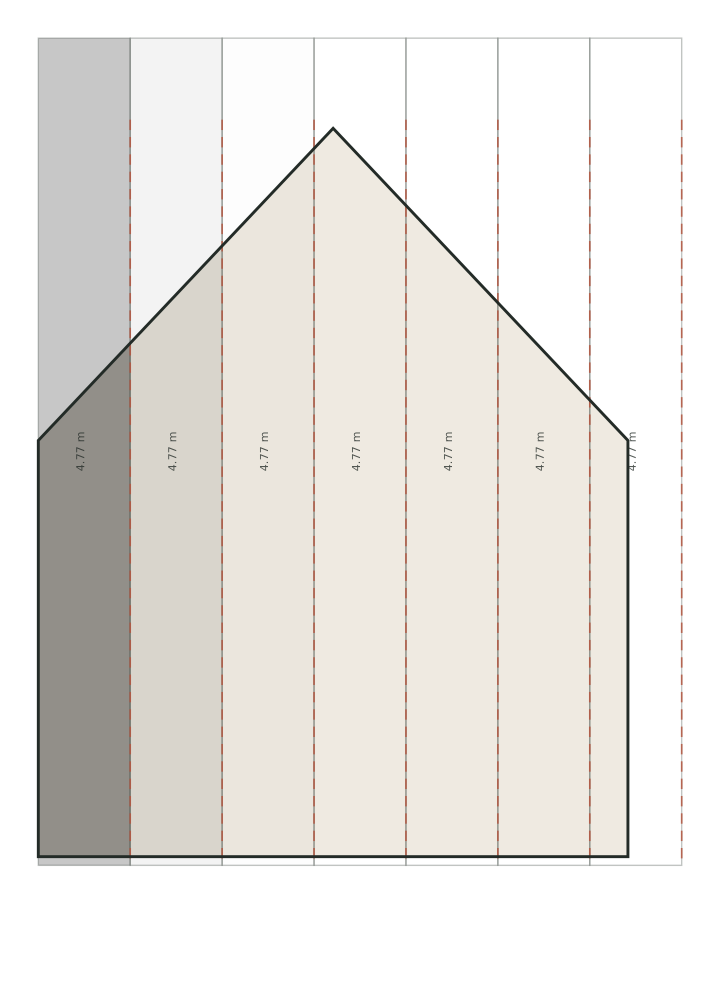
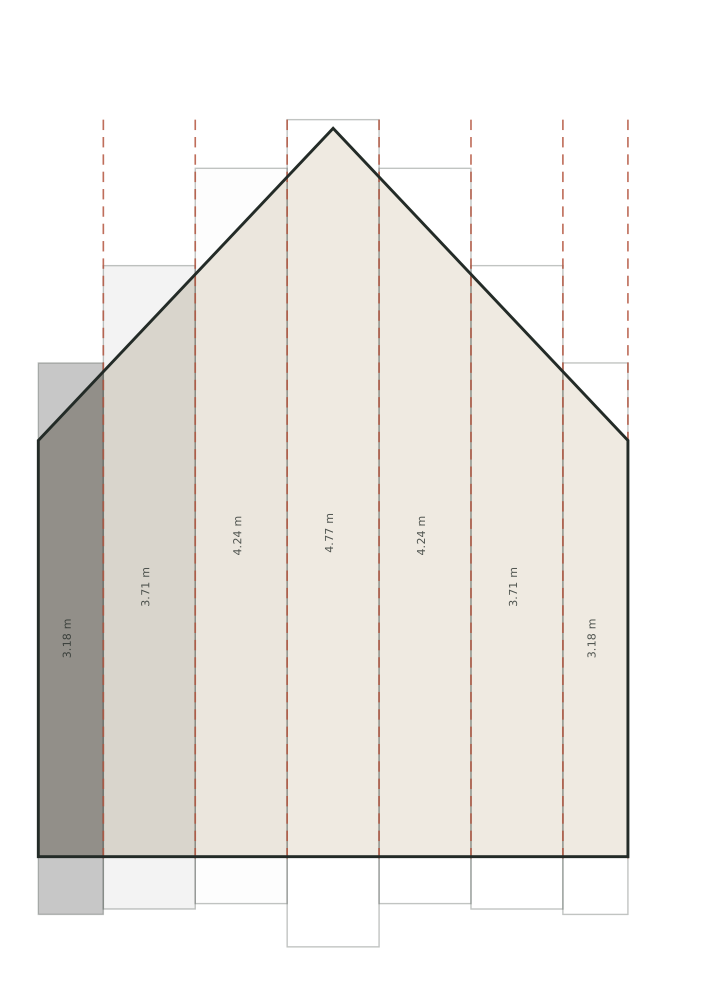
Drag to wipe between them · 3.40 m wide · 53 cm repeat
Roll calculator
5 rolls · €560
7 cuts at 4.77 m · 33.39 m
Cutting waste 6.48 m² — 36.6% of the paper cut
- 7 strips: wall width ÷ roll width, rounded up
- every cut 4.77 m — the tallest point, rounded to a whole repeat
- 2 strips to a roll: 10.05 m ÷ 4.77 m
- 4 rolls, +10% on top
starts at the left-hand edge, every strip cut to the tallest point, plus 10%
Wallpaper Planner
4 rolls · €448
3.18 · 3.71 · 4.24 · 4.77 m, mirrored · 27.03 m
Cutting waste 2.12 m² — 15.9% of the paper cut
- 7 strips, each measured against its own piece of wall
- 27.03 m of paper actually cut
- 15.9% waste, counted rather than assumed
- provably the minimum
seams centred on the wall, whole repeats, head allowance included
One roll and 6.4 m of paper less — and on other jobs, more. Whichever is true.
Drawing is free. It stays free.
All prices include VATFree — forever
€0
Draw the walls, choose the paper, place the seams, register the pattern. Repeat rounding and head allowance included — the two things that make a roll count safe to order against.
One project
€9
The cutting plan, the workbench sheets with every cut numbered by roll, and the order list. One payment; that project stays unlocked.
Buy for €9Every project
€69 / year
For people who paper for a living. Cancel whenever you like from your account; the year you have paid for runs to its end.
Four things a calculator cannot do
Where the numbers actually come from
It measures your wall, not a rectangle
A gable, a raked stairwell, a chimney breast. Walls are drawn as an outline, so every strip is measured against the real shape — a short strip costs what a short strip costs.
It counts what the roll head costs
A roll leaves the factory cut at an arbitrary point in the pattern, so paper is lost before the first strip. Assume that is free and you under-order — which is how a job runs short on a batch that has since sold out.
It packs the rolls like a decorator
Cuts at different points in the pattern cannot share a roll without skipping paper between them. The plan orders each roll so nothing is skipped — and says when that count is provably the minimum, not merely the best it found.
It will tell you to buy more, when that is the truth
A plain 4 × 5 m room with a 64 cm half-drop: the calculator says 12 rolls, or 14 with its ten per cent. The exact plan needs 18. That job would have run four rolls short. Both worked examples are asserted in the software’s own test suite.
Common questions
How is this different from a wallpaper calculator?
A calculator multiplies perimeter by height and adds ten per cent. This measures every strip against the actual shape of the wall, rounds each cut up to a whole pattern repeat, and packs those cuts into rolls the way a decorator cuts them. The two answers disagree — and which way they disagree depends on the job.
Does it really tell me to buy more sometimes?
Yes, and that is the point. On a plain 4 × 5 m room with a 64 cm half-drop a calculator says twelve rolls, or fourteen with its ten per cent. The exact plan needs eighteen, because a roll arrives cut at an arbitrary point in the pattern and finding the motif costs paper before the first strip. Being told to buy more is worth as much as being told to buy less: the alternative is running short mid-job on a batch that has since sold out.
What does it cost?
Drawing the walls, choosing the paper, placing the seams and registering the pattern are free and always will be. The cutting plan, the workbench sheets and the order list are €9 for one project or €69 a year for all of them — both including VAT.
Is the free version safe to order from?
Yes. The free tier still applies pattern-repeat rounding and the roll head allowance, which are the two things that make a roll count safe to buy against. A free tier that left those out would hand you a wrong number and then sell you the fix, which is not a business model.
Do I need an account?
Not to draw. Only to buy — and then it is an email address and a link, no password. What you have paid for follows the address rather than the browser, so it is still there on your phone at the merchant.
Does it handle sloped ceilings and stairwells?
That is the case it was built for. Walls are drawn as an outline rather than chosen from a list of rectangles, so gables, raked stairwells, chimney breasts and stepped walls are all just shapes — and each strip is measured against the real one.
Wallpaper Planning Guides
Tips and calculations for every job.
Popular Rooms
Wallpaper ideas and roll counts for the room you're planning.
Planning a particular room?
What to expect, room by room — repeat, drop, and the strips a typical wall takes.
Open the planner